



The world of private wealth management is undergoing a profound transformation as we enter 2026. High-net-worth individuals (HNWIs) and their families are increasingly prioritizing strategic tax residency planning as a cornerstone of long-term wealth preservation and growth. Recent projections highlight an unprecedented wave of mobility, with an estimated 165,000 millionaires expected to relocate their primary residences internationally this year. This represents a substantial rise from the 142,000 recorded in 2025, signaling a maturing trend where residency choices are driven by sophisticated fiscal, lifestyle, and legacy considerations.
Prominent destinations leading this exodus include the Gulf region, dominated by the United Arab Emirates (UAE), and key Asian powerhouses such as Singapore and Hong Kong. These jurisdictions stand out for their favorable tax regimes, which often feature zero or low rates on personal income, capital gains, and inheritance. They also boast robust residency programs, political stability, advanced infrastructure, and environments that support multi-generational family prosperity. For families managing substantial global assets, particularly those with roots outside Europe in regions like Asia, Africa, Latin America, Russia, and the Middle East, these locations offer not only tax optimization but also enhanced privacy, security, and access to emerging opportunities.
This in-depth exploration examines the macroeconomic and policy drivers fueling these shifts, provides detailed profiles of the leading jurisdictions, offers comparative insights, presents anonymized case studies, and delivers a comprehensive framework for implementation. Based on the most current data from reports like the Henley Private Wealth Migration Dashboard and global forecasts, it reveals why 2026 is a defining moment for proactive residency restructuring in the pursuit of enduring family wealth.
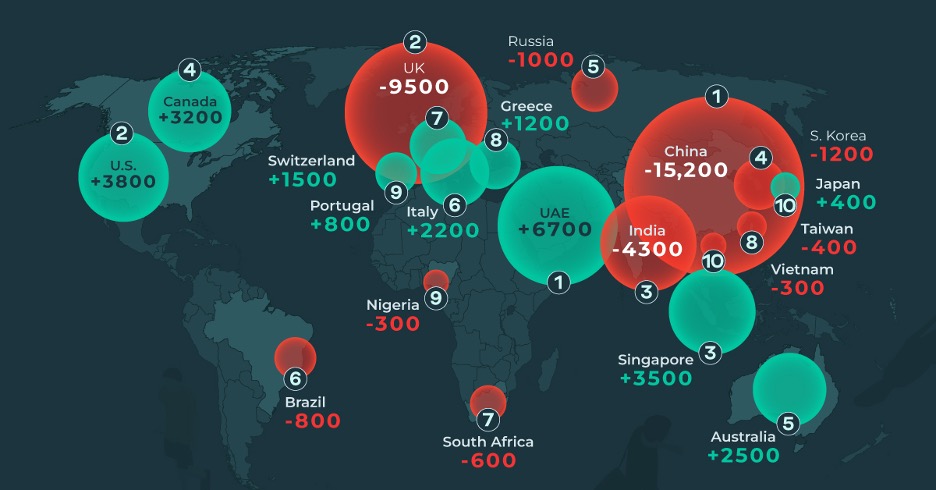
visualcapitalist.com – Mapped: Millionaire Migration in 2024
The underlying forces behind this migration are layered and interconnected. In many traditional wealth centers, families face mounting tax pressures that erode intergenerational capital. Reforms targeting non-domiciled status, expanded wealth taxes, stricter inheritance rules, and heightened enforcement on offshore structures have created an environment of uncertainty. For instance, ongoing implementations of global minimum tax initiatives under the OECD’s Pillar Two framework affect corporate and personal holdings alike, while enhanced Common Reporting Standard (CRS) exchanges demand greater transparency.
Geopolitical dynamics add another dimension. Escalating trade tensions between major powers, regional instabilities in various emerging markets, and policy unpredictability in high-tax nations encourage diversification of both personal residency and asset bases. HNWIs seek jurisdictions with proven neutrality, strong legal protections, and resilience to external economic shocks.
According to the latest Henley reports, the UAE solidified its top position in 2025 with a net inflow approaching 10,000 millionaires, significantly outpacing competitors. Projections for 2026 indicate sustained leadership for the Gulf collectively, alongside strong performance from Asian hubs. This movement is far from a simple tax exodus. It represents a strategic realignment toward ecosystems that actively support capital deployment, innovation, and family governance.
For internationally oriented families, especially those non-European, these relocations unlock efficiencies in managing diverse portfolios spanning equities, real estate, private equity, and alternatives. Independent multi-family offices play an essential role here, drawing on expertise across numerous jurisdictions to design bespoke, compliant solutions that prioritize discretion and alignment.
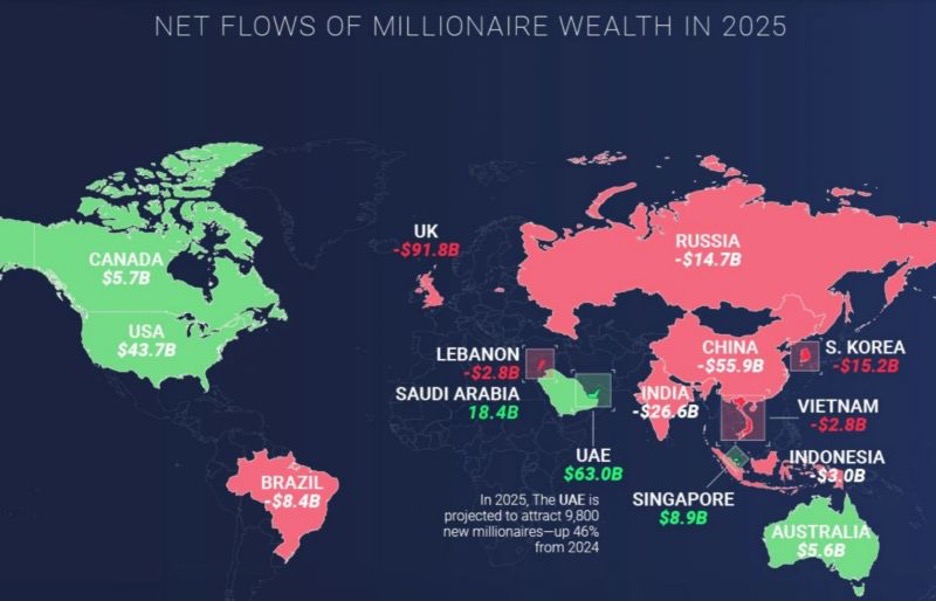
linkedin.com – UAE tops in millionaire wealth migration, UK and China lose …
The UAE: Absolute Tax Efficiency Meets World-Class Lifestyle
The United Arab Emirates has unequivocally established itself as the global leader in attracting private wealth. Its zero percent tax on personal income, coupled with exemptions on capital gains, dividends, and inheritance, creates an unparalleled environment for wealth compounding. Families can retain virtually all investment returns and business profits, a compelling contrast to progressive systems that incrementally diminish capital over generations.
The cornerstone entry mechanism remains the Golden Visa program, continually refined to broaden appeal. Long-term residency (5 to 10 years, renewable indefinitely) is granted through pathways such as real estate investment (minimum AED 2 million), bank deposits, fund contributions, or business establishment. Recent enhancements in 2025 introduced additional categories for outstanding professionals, retirees, and humanitarian contributors, while streamlining processes for high-value investors.

khaleejtimes.com – UAE Golden Visa: 8 easy steps for real estate investors to get 10 …
Within the UAE, Dubai and Abu Dhabi offer complementary attractions. Dubai pulsates as a dynamic global metropolis, renowned for luxury developments, vibrant expatriate communities, international schooling, cutting-edge healthcare, and entertainment options. Its free zones enable 100 percent foreign ownership of companies, ideal for holding structures managing global private assets.
Abu Dhabi provides a more measured pace, anchored by sovereign wealth funds that underpin economic stability and cultural investments. Both emirates rank exceptionally high in global safety indices, with low crime and political neutrality fostering confidence for family relocations.
The UAE’s geographic position as a nexus between East and West facilitates business expansion, while English proficiency and cosmopolitan culture ease integration. Expatriate families often cite enhanced quality of life, from beachfront residences to world-class events, as key decision factors.

Anonymized examples abound. A Southeast Asian manufacturing dynasty relocated its holding company to Dubai, reducing effective taxation while accessing Middle Eastern markets. A Latin American family diversified away from regional volatility by establishing residency and private asset structures in Abu Dhabi. Russian entrepreneurs have leveraged free zones for operational continuity amid external challenges.
Singapore: Institutional Depth and Strategic Asian Positioning
Singapore maintains strong momentum in wealth inflows, with forecasts suggesting 1,800 to 2,300 net gains in 2026. Its territorial tax system levies charges only on locally sourced or remitted income, leaving foreign-derived gains, dividends, and most investments untaxed. The absence of estate duties further solidifies its legacy-friendly profile.
The single-family office ecosystem is among the most developed globally. Tax exemption schemes under Sections 13O and 13U, extended through 2029, provide concessions on specified income for offices managing minimum assets (SGD 20 to 50 million). Streamlined approvals and flexible vehicles like the Variable Capital Company enhance practicality.
Singapore’s hallmarks include impeccable rule of law, low corruption, and strategic location amid Asia’s growth engines. Families with interests in China, India, Indonesia, or Vietnam find unparalleled proximity and networks. Education excellence, from elite international schools to top universities, supports next-generation development. Healthcare and safety standards rival the best worldwide.
Philanthropic structures and innovation hubs attract families blending impact with returns. Compared to the UAE’s outright zero-tax model, Singapore offers nuanced incentives and deeper institutional trust.
Hong Kong: Connectivity and Territorial Taxation Resilience
Hong Kong upholds its competitive stance with territorial taxation applied solely to local-source income (rates up to 17 percent). Foreign earnings, capital gains, and estates remain exempt. Recent initiatives accelerate family office setups and investment-linked residency, targeting 900 to 1,300 inflows in 2026.
As a gateway to Mainland China under common law traditions, it suits families with regional operations. Private markets and banking depth support complex portfolios.

Comparative Insights and Risk Mitigation
The UAE emphasizes simplicity and extravagance, Singapore institutional sophistication, and Hong Kong regional access. Hybrid models, such as UAE residency with Singapore SFO, optimize diversification.
Challenges like substance rules and transparency evolution require vigilant planning. Independent expertise ensures robust compliance.

Comprehensive Implementation Framework
- Comprehensive Assessment: Audit exposures and goals via secure tools.
- Target Selection: Match jurisdiction to priorities.
- Structural Design: Pre-build holdings and governance.
- Application Execution: Secure visas and relocate assets.
- Post-Relocation Optimization: Monitor and refine ongoing.
In conclusion, 2026 heralds an era where tax residency mobility empowers families to safeguard and amplify wealth across generations. The Gulf and Asian leaders provide fiscal, lifestyle, and strategic advantages that redefine possibilities for discerning international HNWIs committed to legacy and prosperity.